vid by Alessandro Sigismondi.
Thursday, August 15, 2013

Friday, August 2, 2013
The Story Behind the Black Board at Restless Spirit
I painted and framed a blackboard at the entrance of the new incarnation of the studio, Restless Spirit.
The intention behind the blackboard at the entrance of the studio was for me to ask a question and for the public - whoever came down the hallway, would write their answer to the question. I asked this question just before I left. (later I changed "today" to "lately")
I was looking forward to coming back and seeing what people wrote. I was going to document it in some way - through photos and writing.
Upon my return I found that someone had erased everything and put three words on it - nice words - but not My words. They decided for whatever reason to erase My board and put whatever they wanted on it.

So I decided that I was going to share quotes for now. Whether they are my own or from writings of my favorite teachers. I will post a new quote every couple of weeks.
I will revisit the "ask a question" project when I can be there more frequently, and have a discussion about the board with those around.
I will revisit the "ask a question" project when I can be there more frequently, and have a discussion about the board with those around.

Monday, July 15, 2013
It Is The Practice That Teaches Not The Teacher
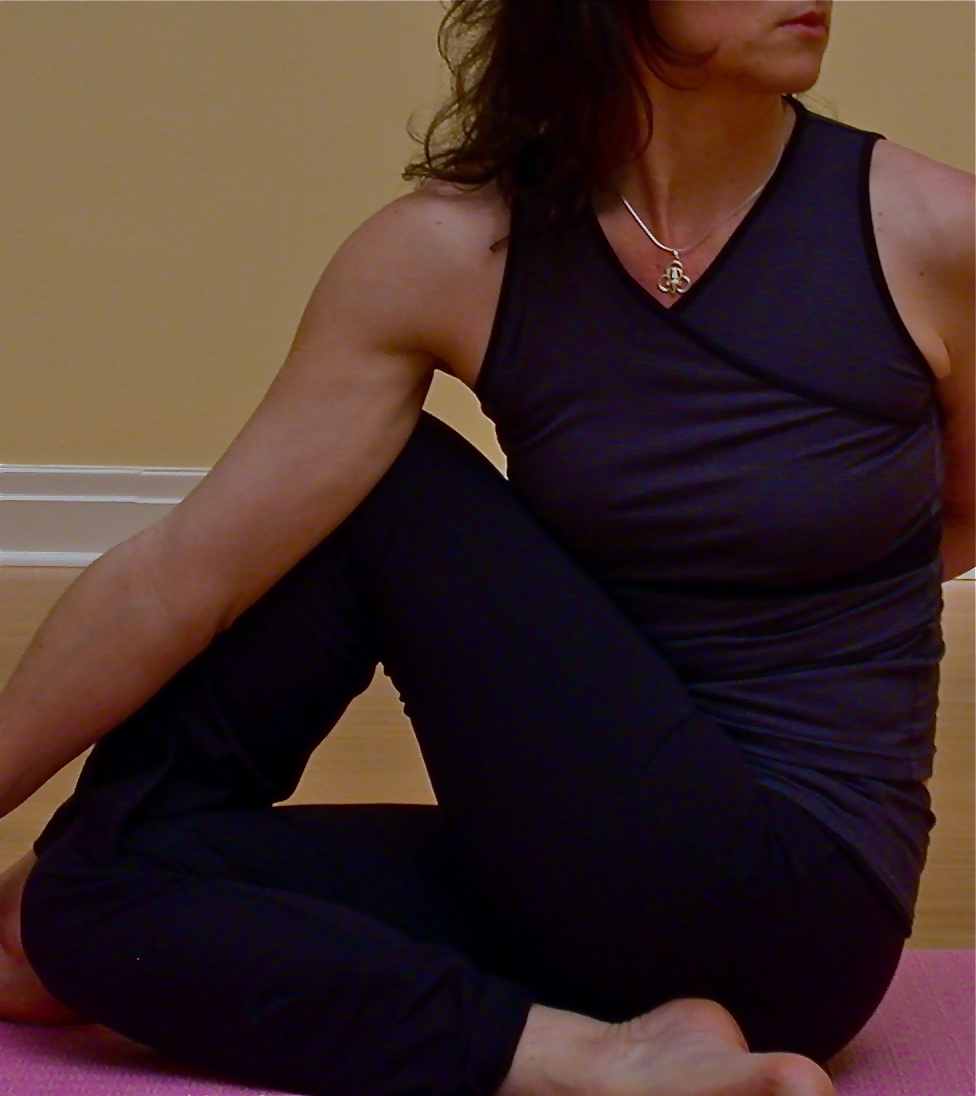
Ashtanga yoga and Iyengar yoga have a few things in common:
1. They both come from a very traditional background and were developed from ancient understandings of yoga. They come from students of Krishnamacharya.
2. They have been taught without variation for decades (except maybe variation of teaching styles to accommodate level of student and time spent in class) and there's a silent agreement that the form and process of the practice would not be altered. Meaning that: say the Ashtanga series would not see any variation or addition to the main idea and postures of the practice. Teachers knew way-back-when that yoga was not about them.
A lot of derivatives of these practices of yoga have developed since
because of this particular person's predilections or perhaps that person's understanding of what it takes to bring Yoga (not only asana) to the masses. Whatever the case, these yogas became things like Vinyasa, Jivamukti, Anusara, etc., and the idea of yoga (asana) expanded for better or worse. We see an explosion of these variations because Asana yoga has become very popular. As it becomes more popular with the "Thinspiration" generation it is more about the body and looking good than ever before. Yoga (asana) is changing because the students have changed.
Is There A Place For Traditional Yoga (Asana) Practice?
Being a fairly traditional Ashtanga teacher, the traditional and strict aspect of both styles can turn off newbie and young students, and those who are looking for self-gratification. I find that it is more the aspect of "I want to feel good about myself and look good" which seems to be paramount for most students these days. Precise instruction and conceptualization is not what students are looking for because somehow it makes some students feel "less than". It sounds like criticism and doesn't add the students' narcissistic vanity of "how good I am for being here and doing this".
I have found that these days having a good sweat is not enough. The classes have to appeal to the aspect of personal power. So the more challenging postures in a class the better.
I tend to balance my classes (this is when I teach Stylized Vinyasa) with a style of teaching that challenges and at the same time, I do not introduce postures like some arm balances or things like the splits, etc., unless I see that the majority of students are a little more seasoned and I've taught them for a while and gotten to know them. I have witnessed classes where teachers will put beginners into some poses at risk of injury without any concern and the students just love it. Conversely, I have challenged those who just wanted to really do a restorative class (wasn't even advertised as one but they expected it (?)) and gotten my head chewed off because of it.
Just Teach As The Practice Dictates - Not What Your Or Your Students' Egos Dictate
There really isn't any way to predict students' preferences anyhow, and I have to say that Iyengar and Ashtanga stay steadfast in maintaining the traditional way of teaching as much as possible - and no, I don't mean yelling at your students or calling them names - that is the style of the teacher not the practice, and doesn't come from the deep understanding of the practice. I mean that the process through which the student is guided is as much about the practice as it is about the student.
It Is The Practice That Teaches Not The Teacher
Iyengar must stay as Iyengar as possible. Otherwise it starts to get confused. I have taught Ashtanga for years now and have trained in it extensively. I know the practice beyond the postures just because of the practice itself. That is what I'm teaching. I know some "Ashtanga" teachers who do not practice it and therefore do not know the practice as a practice. They do not know the intricacies of it. These teachers bow to the pressures of students' to add postures which do not belong in the series, make it harder or easier, and let go of the rhythm of the class to appease those who just want to "feel good about myself" to the detriment of Ashtanga. I have had great difficulty teaching Ashtanga after these teachers because students are not being educated in it.
Yoga Is Yoga First And Foremost
But teachers will try anything including risking the injury of their students because for some reason we have decided in this culture that yoga is about popularity and money instead of teaching simply and with humility.
It is the teacher's role to teach their students about the practice beyond the ego-ic need to be appeased and catered to (Spa-like). The most essential teaching for us as teachers and for our students is that: It is not the practice that makes you feel bad nor is it the teacher's responsibility. Feeling good about yourself is an inner conflict and learning that and coming to terms with it is revealed in the practice.
The teacher must teach the practice as it is because the practice is beyond the teacher and the student. It is bigger than them.
Peace!
This post is an extended version of a comment I made to another post by a fellow yogini. Here is the post:
http://yogaspy.com/2013/07/08/can-iyengar-yoga-attract-the-masses/
Thanks Lucy
Christine
This post is an extended version of a comment I made to another post by a fellow yogini. Here is the post:
http://yogaspy.com/2013/07/08/can-iyengar-yoga-attract-the-masses/
Thanks Lucy
Christine
Tuesday, July 9, 2013
Lessons of a Yogini

The body is a funny thing. Every day is different. Last year I was able to almost reach the ground: about 2 inches to go. Then all of a sudden I was unable to get low at all. My inner thigh muscles were excruciatingly tight. No warning. Nothing. They just didn't want to play anymore.
My first reaction was - sadness - not anger. I was sad because "I've worked so hard..." etc. I was sad because I have the type of body that snaps back and sometimes can't do things I suppose a 'normal' body can - or what we think a normal body can - it snaps back and I basically have to start pretty close to the beginning again. I was sad because when you get to a certain stage in your practice there's a kind of flow that allows for that elusive sensation of freedom in the body which can be viscerally experienced and I lost that - at least I thought I had. I still feel it - even when I'm tight and my body seems uncooperative.
As I get older, I've realized a few things:
That this is really as far as I can go - physically. There are postures that I will never be able to do "successfully" - whatever that means.
That I know my body so well, that I can feel the small changes in my body which can be very satisfying, and therefore I work very smart these days.
And that what I was chasing in my early years of practice are not important anymore. Oh that doesn't stop me from working postures to the point of a good sweat or at least feeling satisfied with my efforts. But that pendulum swing back and forth of emotions about what my body looks like in the posture does not equal my efforts doesn't drive me.
I am grateful for all those years of effort though. The wish to be the best teacher drove me to really get to know postural yoga in a different way. In a way that was about asking the question: When I do postures, what makes it an aspect of YOGA? How am I expressing YOGA in an 'imperfect' body? Perseverance, courage and humility are the foundations of practice - am I expressing those? What is the difference between:
perseverance and greediness?
courage and ignorance?
humility and self-consciousness?
With those questions and more inspiration I became very attuned to my body, mind and spirit.
Back to the task of practice: it is more now about practicing and working on things as a matter-of-course rather than trying to get somewhere...fast.
So with the help of a combination of postures in my practice - including some unconventional ones like squatting sideways, with warrior twos and side angle, some seated and lying down hip openers. Now with a few months work I am slowly making my way down again. First time in months I am able to place my chest on the floor.
I am very content with my body and my practice these days. There is a certain amount of calm. That I suppose is what it means to really do YOGA.
Peace!
Wednesday, July 3, 2013


Thursday, June 27, 2013
The Meeting: Maharaji and Ram Dass

This is a beautiful story. I love hearing it. It is the magic of meeting your teacher.
Photo: Neem Karoli Baba courtesy of the internet
Thursday, June 13, 2013
Another woman's view: What I Love and Hate about Tantra and Sacred Sex
What I Love and Hate about Tantra and Sacred Sex: Have you ever experienced the kind of relationship that, years after it’s ended, you look back and think, “how is it possible ...
This post (see link above) is a very honest portrayal of what happens during the Spiritual journey.
Everyone's journey is expressed differently through different passages and avenues. We all go through a kind of right or ritual when a part of ourselves needs to manifest. Each passage is different in how it is expressed and the intensity with which it is expressed. Some of us do not even feel that there is a need at all. Or worse, we are not directed correctly by the people we trust - hopefully eventually, most of us who are seeking can find the way on our own...
In this case, this woman's psyche led her in a Tantric/Sacred Sexual direction - just because of what her organism at that moment in time needed. This was her right of passage that she believed would end the emptiness, and the fear.
After going along this journey fully and completely in full surrender, I would imagine she need not visit this particular part of herself again. On the other hand, like it is with the spiritual process - this experience may just be the tip of the iceberg and there may be things yet to uncover... I don't know.
This woman like so many of us pursued a particular path in order to find what she thought she lacked and in the end came to the same conclusion which is offered at the outset of any spiritual teaching - "...that which I seek was within me all along." It doesn't matter who you are and what you believe or what you are told - we all have to go through the 'fire' in order to heal, to become conscious and whole. We must experience whatever it is we need to in order to live fully and develop deeply. It doesn't matter what anyone tells you or what you understand intellectually, living our lives fully means to dive into parts of ourselves by doing things, experiencing what might seem risky, shameful or embarrassing. This passage this woman took is like many passages we all take in our lives over and over again. I'm sure if she thought back on it - this wasn't the first time she's encountered something like this and... it won't be her last.
This is how we unfold!
Peace!
Christine
Subscribe to:
Posts (Atom)